 Spray Systems Solution Provider




Pursuing excellence, perfection, and perfection
4001 123 933
Free hotline Monday to Friday 8:30-17:00
Contact NowSelective Catalytic Reduction (SCR) is currently the most widely used denitrification technology in industry. The NOx emission control applied to combustion equipment such as power plant boilers, industrial boilers, and garbage incineration can ideally achieve a NOx removal efficiency of over 90%. It is currently one of the most widely used and mature technologies. The reaction principle of low-temperature SCR is to use reducing agents such as ammonia or urea to selectively decompose NOx in the flue gas into harmless nitrogen (N2) and water (H2O) through the action of catalysts at a certain temperature, thereby reducing the concentration of NOx in the flue gas. In addition, through catalytic action, dioxins (DXNs) in flue gas can be decomposed into harmless carbon dioxide, water, and trace amounts of hydrogen chloride.
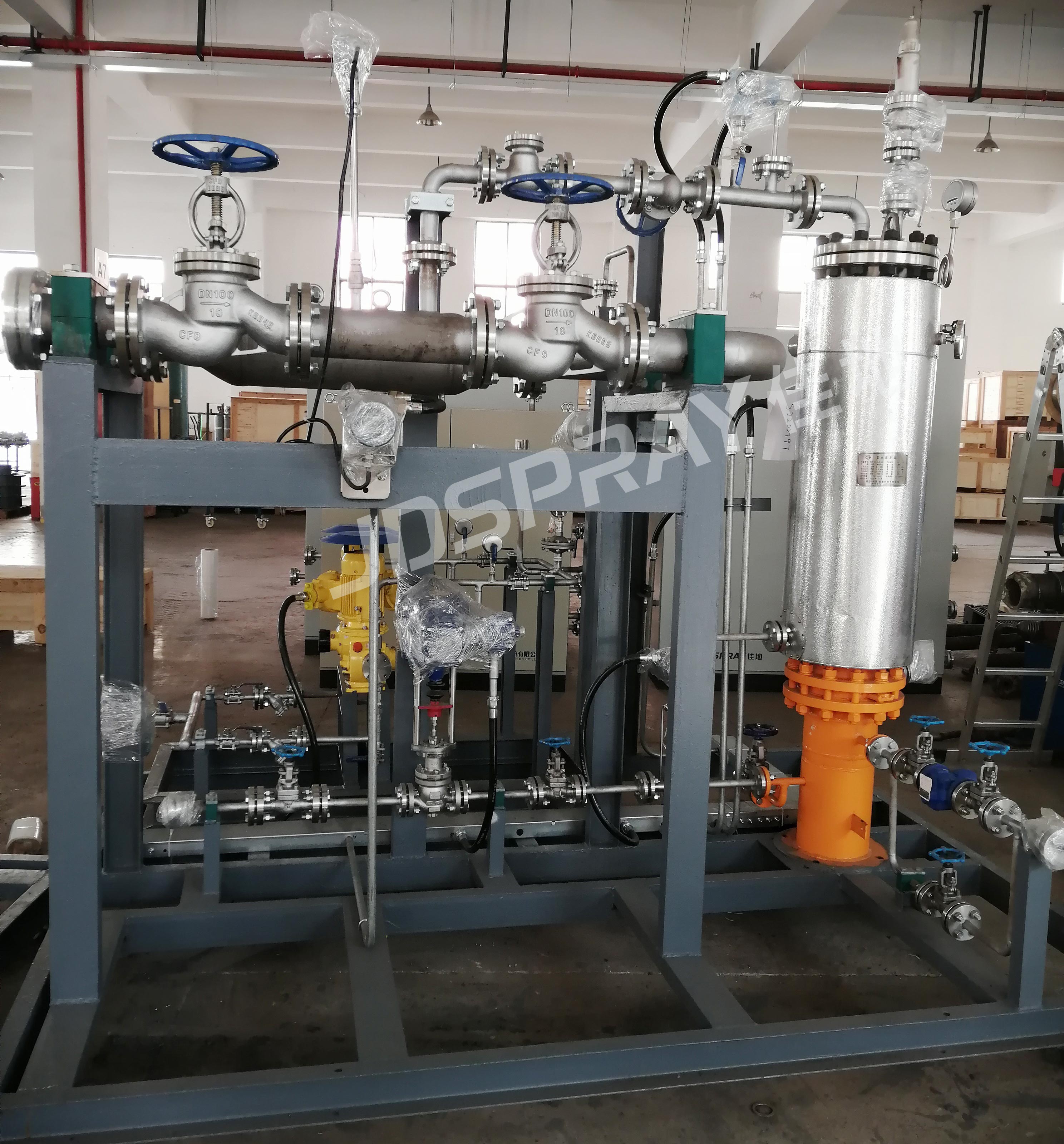
The basic principle of SCR denitrification process can be expressed by the following equation:
The basic principle of SCR for removing dioxins can be expressed by the following equation:
Mature and reliable technology with high denitrification efficiency;
Low ammonia escape reduces secondary pollution;
Fast reaction speed, low conversion rate of SO ₂/SO ₂, reducing corrosion and blockage of equipment;
Uniform ammonia spraying, low resistance, low ammonia consumption, and low operating costs;
Suitable for denitrification of low-temperature flue gas.
 Service Hotline:4001 123 933